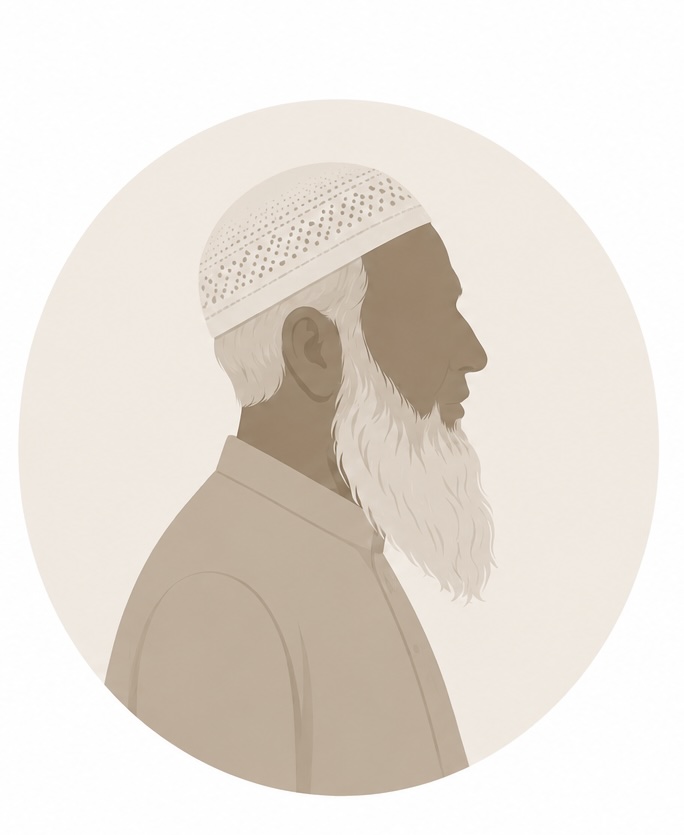
Syed Hussain
Syed Hussain (1888–1949) was the journalist-diplomat who took India's case for freedom to the world — a voice for his nation in foreign capitals at a time when his nation was not yet allowed to speak for itself. Born in the United Provinces, he edited Motilal Nehru's daily The Independent in Allahabad, turning its pages into a platform for uncompromising anti-colonial journalism. His editorials argued that Hindu-Muslim unity was not a political strategy but the very bedrock of Indian nationalism.
In 1920, Hussain joined the Khilafat delegation to Europe alongside Maulana Muhammad Ali Jauhar, advocating for Indian Muslim concerns on an international stage. He then embarked on a remarkable two-decade sojourn in the United States, lecturing at universities, writing for American publications, and building international public opinion in support of Indian independence. He was, in effect, India's unofficial ambassador long before the country had any official ones.
When independence finally came in 1947, Prime Minister Nehru appointed Hussain as India's first Ambassador to Egypt and Minister to Transjordan — a fitting culmination to a life spent representing his nation abroad. He served in Cairo with distinction until his death in 1949, and was buried in Cairo's historic City of the Dead with full state honors. He was one of the unsung architects of India's diplomatic presence in the Arab world — a bridge between nations at the dawn of freedom.
Sources & Further Reading
Scholarly Books & Press Records
- Gail Minault. The Khilafat Movement: Religious Symbolism and Political Mobilization in India. Columbia University Press, 1982.
- Margarita Barns. The Indian Press: History of the Growth of Public Opinion in India. George Allen & Unwin, 1940.
Diplomatic Archives
- Ministry of External Affairs, Govt. of India. Records on Early Diplomatic Appointments: Ambassador Syed Hussain (Cairo, 1948–1949).