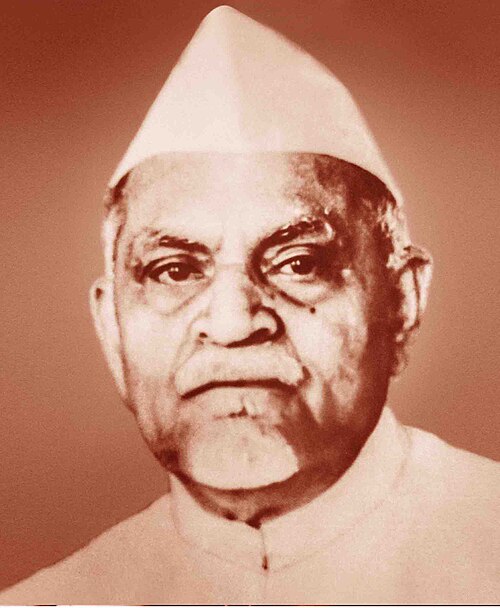
Hafiz Mohammad Ibrahim
Hafiz Mohammad Ibrahim (1889–1968) was the freedom fighter who transitioned seamlessly into nation-building — a parliamentarian, minister, and governor whose career traced the arc from colonial resistance to constitutional governance. Born in Uttar Pradesh, his background as a Hafiz — one who had memorized the entire Quran — gave him a moral authority that he deployed not for sectarian purposes but for the cause of a united, secular India.
Elected to the United Provinces Legislative Assembly in 1937, Ibrahim served as Minister for Communication and Irrigation, bringing roads, canals, and agricultural development to one of India's most populous regions. He was a vocal opponent of the Muslim League's Two-Nation Theory, campaigning across UP for composite nationalism. When partition came, he was elected to the Constituent Assembly of India, where he helped draft the Constitution of the new republic.
In independent India, Ibrahim served as Union Minister for Power and Irrigation, Leader of the Rajya Sabha, and Governor of Punjab. His career exemplified the transition that the freedom movement demanded: from agitator to administrator, from prison cell to parliament, from dreaming of freedom to building the institutions that would sustain it. He died in January 1968, having served his country in war and peace, in opposition and in government — a life devoted entirely to the nation.
Sources & Further Reading
Reference Works & Parliamentary Archives
Scholarly Books & Legislative Histories
- Paul R. Brass. Factional Politics in an Indian State: The Congress Party in Uttar Pradesh. University of California Press, 1965.