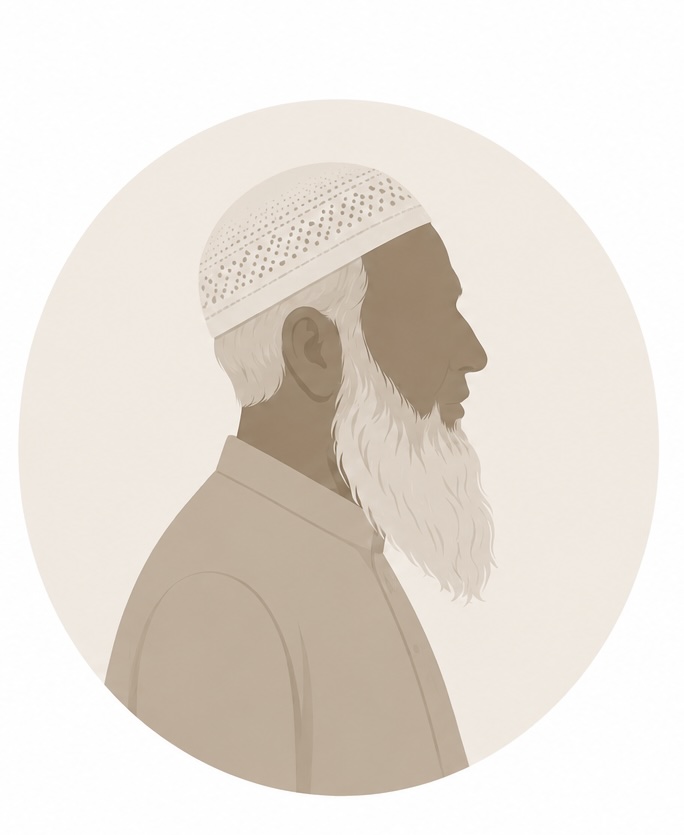
Karamat Ali Jaunpuri
Karamat Ali Jaunpuri (1800–1873) was a dynamic scholar-reformer who mobilized Bengali and Assamese Muslims against British colonial rule during the mid-19th century. Born in Jaunpur, Uttar Pradesh, he studied under the leading scholars of his day and traveled extensively across Bengal and Assam — regions where the oppressive Permanent Settlement and the indigo plantation system had reduced millions of Muslim peasants to debt bondage. Jaunpuri recognized that religious reform and economic resistance were inseparable, and he devoted his life to both.
Jaunpuri's movement, often described as a parallel stream to the Faraizi Movement led by Haji Shariatullah, emphasized a return to foundational Islamic practices while simultaneously organizing peasant resistance against colonial exploitation. He traveled tirelessly through Bengal and Assam, establishing schools, preaching against British interference in religious affairs, and calling upon Muslims to resist the economic strangulation of the zamindari system. His influence was particularly strong in the Sylhet and Cachar regions, where thousands of peasants looked to him for both spiritual guidance and political direction.
British colonial authorities monitored Jaunpuri closely, viewing his reform movement as a threat to the stability of the revenue and plantation systems. The government banned his entry into Sylhet for a period, fearing his influence over the peasant population. He died in 1873 during a journey to Bombay, but his movement continued to influence Muslim religious and political consciousness in Bengal and Assam for decades after his death.
Sources & Further Reading
Reference Works & Encyclopedias
Scholarly Books & Monographs
- Rafiuddin Ahmed. The Bengal Muslims, 1871–1906: A Quest for Identity. Oxford University Press, 1981.
- Tazeen M. Murshid. The Sacred and the Secular: Bengal Muslim Discourses, 1871–1977. Oxford University Press, 1995.