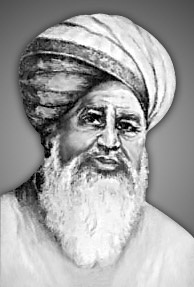
Haji Shariatullah
Haji Shariatullah (1781–1840) was the scholar who declared British India a land of war — and then organized a peasant movement to prove it. Born in Faridpur, Bengal, he spent nearly twenty years studying Islamic jurisprudence in Mecca before returning to his homeland in 1818. What he found horrified him: a Muslim peasantry crushed by British-backed zamindars, weighed down by superstition, and stripped of both economic dignity and religious authenticity. He would spend the rest of his life trying to give them back both.
The Faraizi Movement — named after fara'id, the obligatory duties of Islam — was more than a religious reform. By declaring British India Dar al-Harb (a territory under hostile occupation), Shariatullah issued an implicit challenge to the legitimacy of colonial rule itself. He forbade Friday congregational prayers on the grounds that true Islamic community could not function under foreign occupation, and he urged peasants to refuse the illegal taxes imposed by British-backed zamindars. The colonial administration understood the threat: they placed him under constant police surveillance and detained him repeatedly.
When Shariatullah died in 1840, his movement was small but fierce. What he could not have known was that his son, Dudu Miyan, would transform that movement into a full-scale peasant uprising that would rattle the foundations of colonial rule in Bengal. Haji Shariatullah was the spark. His son would be the fire.
Sources & Further Reading
Reference Works & Encyclopedias
Scholarly Books
- Muin-ud-din Ahmad Khan. History of the Fara'idi Movement in Bengal (1818–1906). Pakistan Historical Society, Karachi, 1965.
- Sufia M. Uddin. Constructing Bangladesh: Religion, Ethnicity, and Language in an Islamic Nation. University of North Carolina Press, 2006.