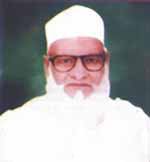
Maulana Mohammad Ismail Sambhali
Maulana Mohammad Ismail Sambhali (1895–1968) was a quiet pillar of the freedom movement — the kind of unsung hero who kept the machinery of resistance running when the spotlight was elsewhere. Born in Sambhal, Uttar Pradesh, he was educated at Darul Uloom Deoband, where the fusion of scholarship and anti-colonial activism became the guiding principle of his life. He was not a flamboyant orator or a celebrated revolutionary. He was something rarer: a man who showed up, year after year, decade after decade, and did the work.
Arrested during the Khilafat and Non-Cooperation Movements for anti-government speeches, Sambhali was a close associate of Maulana Husain Ahmad Madani and a steadfast advocate of composite nationalism within the Jamiat Ulema-e-Hind. During the 1940s, as the partition debate reached its fever pitch, he traveled across Uttar Pradesh, addressing public meetings and arguing — with the patient authority of a scholar — that the division of India would be a catastrophe for Muslims and a betrayal of Islam's universal message.
After 1947, Sambhali dedicated himself to educational administration, understanding that the battle for India's soul had shifted from the streets to the classrooms. He worked quietly, persistently, to ensure that Muslim institutions would thrive in the secular republic. He died in 1968, having witnessed both the triumph of independence and the tragedy of partition — and having spent every year between them building bridges that others were determined to burn.
Sources & Further Reading
Scholarly Books & Studies
- Barbara D. Metcalf. Islamic Revival in British India: Deoband, 1860–1900. Princeton University Press, 1982.
- Muhammad Miyan Deobandi. Ulama-e-Hind ka Shandar Mazi. Jamiat Ulema-e-Hind.