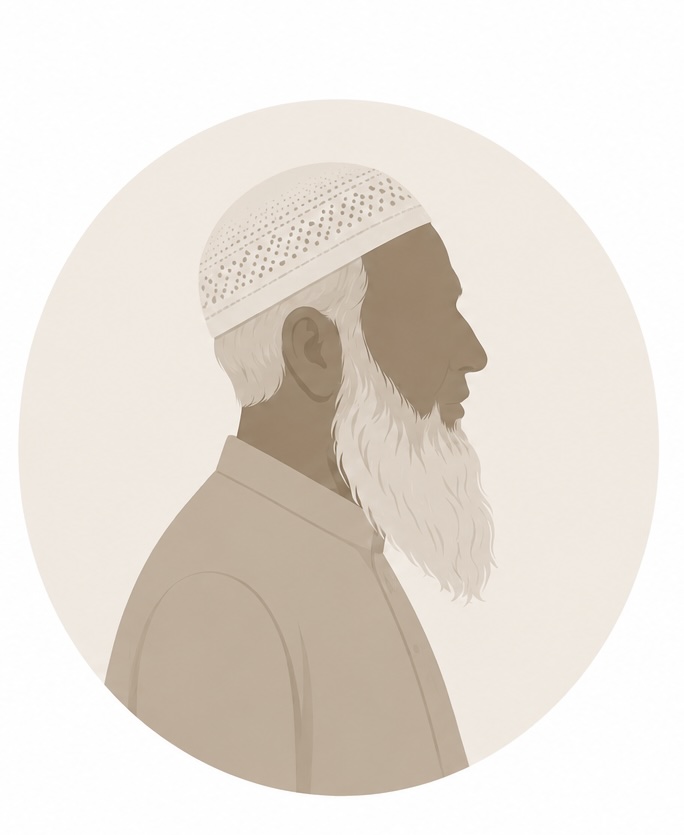
Maulana Inayat Ali Sadiqpuri
Maulana Inayat Ali Sadiqpuri (1794–1858) was the ghost the British could never catch — a commander who inherited the fallen banner of Balakot and waged a twenty-year guerrilla war from the mountains of the North-West Frontier. Born into the famed Sadiqpur family of Patna, he and his elder brother Wilayat Ali transformed their ancestral estate into the nerve center of anti-British resistance across northern and eastern India. Where other rebels fell, Inayat Ali endured — and where other movements crumbled, he rebuilt.
After Syed Ahmad Barelvi and Shah Ismail fell at Balakot in 1831, Inayat Ali took command of the shattered resistance. He established military encampments at Sitana and Swat, far beyond the reach of Company bayonets, and from these mountain strongholds he directed a clandestine network of recruitment, funding, and supply that stretched from the villages of Bihar to the tribal territories of the Frontier. For over two decades, he led armed skirmishes against East India Company patrols, always one step ahead of the British intelligence officers who hunted him.
When the 1857 Rebellion erupted, Inayat Ali coordinated Frontier operations to coincide with the uprisings sweeping northern India. He died in 1858 in the mountains of Swat — still fighting, still free, still refusing to surrender. The British, unable to capture him alive, exacted their revenge on his family: the Sadiqpur estate was demolished, the ancestral home razed to the ground in punitive state trials. But the Sadiqpur legacy could not be demolished — it had already been etched into the history of Bihar's anti-colonial resistance, a testament to a family that gave everything for freedom.
Sources & Further Reading
Reference Works & Official Portals
- Amrit Mahotsav (Ministry of Culture). Unsung Heroes Series: Sadiqpur Movement, Patna (archived).
Scholarly Books & Monograph Studies
- Qeyamuddin Ahmad. The Wahabi Movement in India. Firma KLM, Kolkata, 1994.
- K.K. Datta. History of the Freedom Movement in Bihar (Vol. I). Government of Bihar, Patna, 1957.