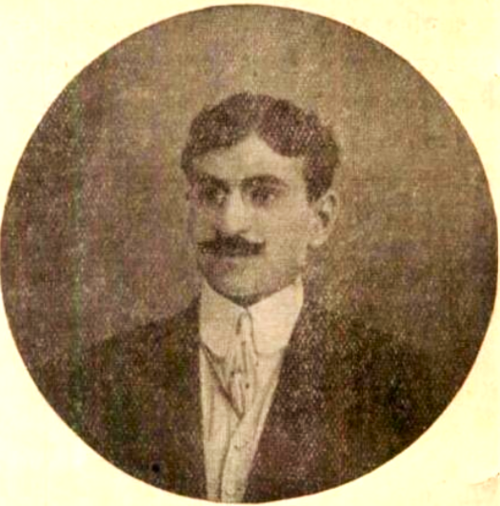
Saifuddin Kitchlew
Dr. Saifuddin Kitchlew (1888–1963) was the man whose arrest ignited the firestorm that became Jallianwala Bagh — one of the darkest chapters of colonial brutality, and one of the most powerful catalysts of India's freedom movement. Educated at Cambridge and the University of Münster, he returned to Punjab a brilliant barrister. But the law as practiced by the British was not justice, and Kitchlew chose resistance over a comfortable career.
In early 1919, Kitchlew and Dr. Satyapal led massive, united protests against the Rowlatt Act in Amritsar — mobilizing Hindus, Muslims, and Sikhs under a single banner of defiance. On 10 April, British authorities arrested both men in secret and deported them to Dharamshala. The outrage was explosive. Three days later, thousands gathered at Jallianwala Bagh to protest peacefully. General Reginald Dyer's troops opened fire on the unarmed crowd, killing hundreds. Kitchlew survived the massacre that his arrest had unwittingly triggered — but he emerged from that horror more determined than ever.
Kitchlew went on to serve as President of the Punjab Congress, General Secretary of the AICC, and a co-founder of Jamia Millia Islamia. He was imprisoned repeatedly — during the Khilafat, Non-Cooperation, and Civil Disobedience Movements — each incarceration only deepening his commitment to freedom and communal harmony. In 1952, he became the first Indian recipient of the Lenin Peace Prize, a fitting recognition for a man who had stared into the abyss of colonial violence and answered it with a lifetime of peaceful resistance.
Sources & Further Reading
Reference Works & Portals
Scholarly Biographies & Historical Reports
- Toufique Kitchlew. Saifuddin Kitchlew: Hero of Jallianwala Bagh. National Book Trust, 1987.
- V.N. Datta. Jallianwala Bagh. Lyall Book Depot, Kurukshetra, 1969.
- Disorders Inquiry Committee (Hunter Commission Report). Government of India, 1920.