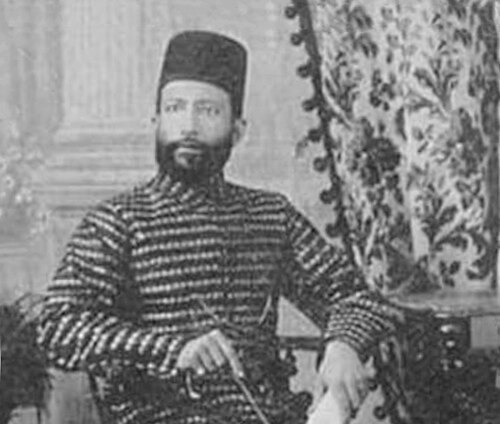
Hakim Ajmal Khan
Hakim Ajmal Khan (1868–1927) was a healer of both bodies and nations. Descended from the legendary Sharifi family — court physicians to the Mughal emperors — he carried forward a centuries-old tradition of Unani medicine while simultaneously throwing himself into the most urgent political struggles of his age. A man of profound dignity and quiet resolve, he was trusted by Gandhi, respected by the British, and loved by the poor who lined up at his clinic in Delhi.
When the Khilafat and Non-Cooperation Movements swept India, Hakim Ajmal Khan stood at their center. He renounced his British-bestowed title of "Haziq-ul-Mulk" and returned his official medals — gestures of defiance that resonated across the country. When Congress President C.R. Das was arrested in 1921, it was Ajmal Khan who stepped forward to preside over the national convention, a steady hand in a season of chaos. He served as President of both the Indian National Congress and the All-India Muslim League — a bridge between communities at a time when the gulf between them was widening.
In October 1920, he was chosen as the first Chancellor of Jamia Millia Islamia, the nationalist university born from the spirit of non-cooperation. He poured his personal wealth into keeping the institution alive during its desperate early years, understanding that the battle for freedom would be won not only on the streets but in the classrooms. He was a man who grasped a fundamental truth: that a nation's strength lay not in its armies but in its institutions — and he built both with equal devotion.
Sources & Further Reading
Reference Works & Official Portals
Scholarly Biographies & Institutional Histories
- Zafar Ahmad Nizami. Hakim Ajmal Khan. Publications Division, Ministry of Information and Broadcasting, Govt. of India, 1988.
- Hakim Syed Zillur Rahman. Researches in Unani Medicine and the Sharifi Family of Delhi. Ibn Sina Academy, 2001.
- Gail Minault. The Khilafat Movement: Religious Symbolism and Political Mobilization in India. Columbia University Press, 1982.