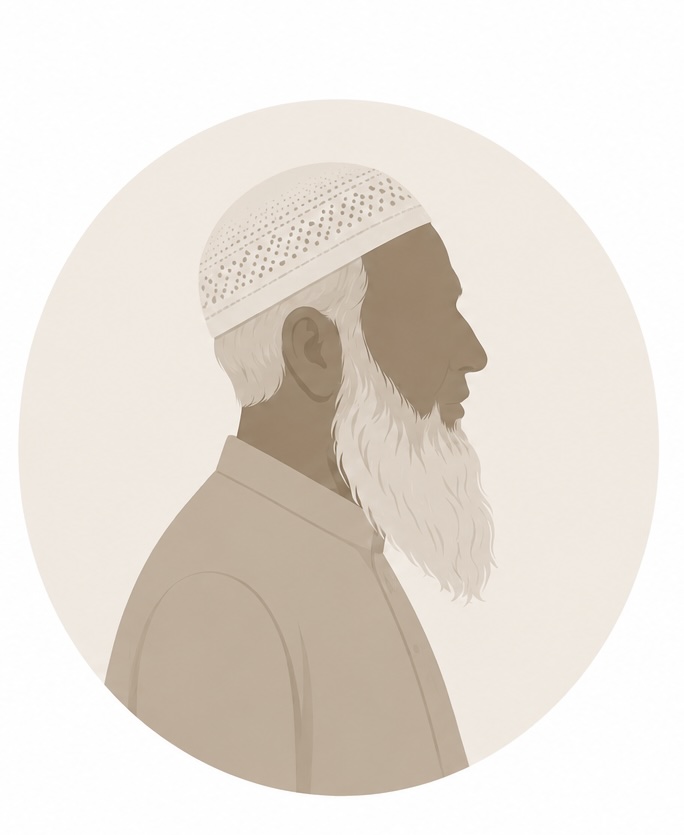
Haji Sahib Turangzai
Haji Sahib Turangzai (born Fazal Wahid, 1858–1937) was the Pashtun reformer who mentored the Frontier Gandhi and spent his life one step ahead of British bayonets. Born in the village of Turangzai in Charsadda, he performed the Hajj and returned to the North-West Frontier with a burning mission: to liberate his people through education and to resist British encroachment with every weapon at his disposal — including the mind.
Turangzai established a network of independent Azad Schools across the Frontier, teaching literacy and political consciousness to Pashtun children whom the colonial state preferred to keep uneducated and compliant. He was a key operative in the Silk Letter Movement, maintaining communications between the Deoband scholars and anti-British tribal fighters in the mountains. When British punitive expeditions swept through the Frontier, Turangzai was always one village ahead, sheltered by a network of loyal tribesmen who would sooner die than betray him.
His most enduring legacy was his student — a young Khan Abdul Ghaffar Khan, who regarded Turangzai as both spiritual guide and political mentor. The Khudai Khidmatgar movement, the Red Shirts, the non-violent army of Pashtuns — all of it grew from seeds that Turangzai had planted. When he died in December 1937, thousands of Pashtuns walked miles to attend his funeral, mourning the man who had taught them that the greatest jihad was the struggle for dignity.
Sources & Further Reading
Reference Works
Scholarly Books & Frontier Histories
- Sana Haroon. Frontier of Faith: Islam in the Indo-Afghan Borderland. Columbia University Press, 2007.
- Mukulika Banerjee. The Pathan Unarmed: Opposition and Memory in the North West Frontier. Oxford University Press, 2000.