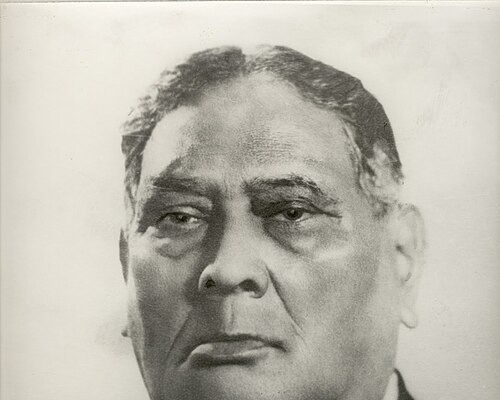
AK Fazlul Huq
A.K. Fazlul Huq (1873–1962), the "Sher-e-Bangla" — the Tiger of Bengal — was one of the most electrifying political figures the subcontinent has ever produced. A brilliant lawyer and mathematician educated at Calcutta University, he could have lived a life of elite comfort. Instead, he threw himself into the cause of Bengal's suffering peasantry with a ferocity that earned him his famous title. When he spoke, villages listened. When he moved, governments trembled.
In 1936, Fazlul Huq founded the Krishak Praja Party — the party of tenants and peasants — to wage war against the zamindari system that had reduced millions of Bengali cultivators to debt bondage and despair. As Prime Minister of Bengal from 1937, he enacted the Bengal Tenancy Amendment Act and the Agricultural Debtors Act, giving legal protection and hope to the forgotten millions who tilled the soil. He was the first leader to prove that Bengal's Muslim peasantry could be organized into a political force capable of reshaping the province.
In 1940, Huq moved the historic Lahore Resolution — the document that formally demanded independent Muslim states and became known as the Pakistan Resolution. But within a year, he had broken with Jinnah, forming a coalition with Sarat Chandra Bose and the Forward Bloc that defied every political orthodoxy. After 1947, he continued to serve as Chief Minister and Governor of East Pakistan. Love him or loathe him — and many did both — no one could deny that the Tiger of Bengal had earned his stripes. He was a survivor, a savior of peasants, and a tiger who refused to be tamed.
Sources & Further Reading
Reference Works & Encyclopedias
Scholarly Books & Political Histories
- Harun-or-Rashid. The Foreshadowing of Bangladesh: Bengal Muslim League and Muslim Politics 1936–1947. University Press Limited, 2003.
- Shila Sen. Muslim Politics in Bengal 1937–1947. Impex India, 1976.