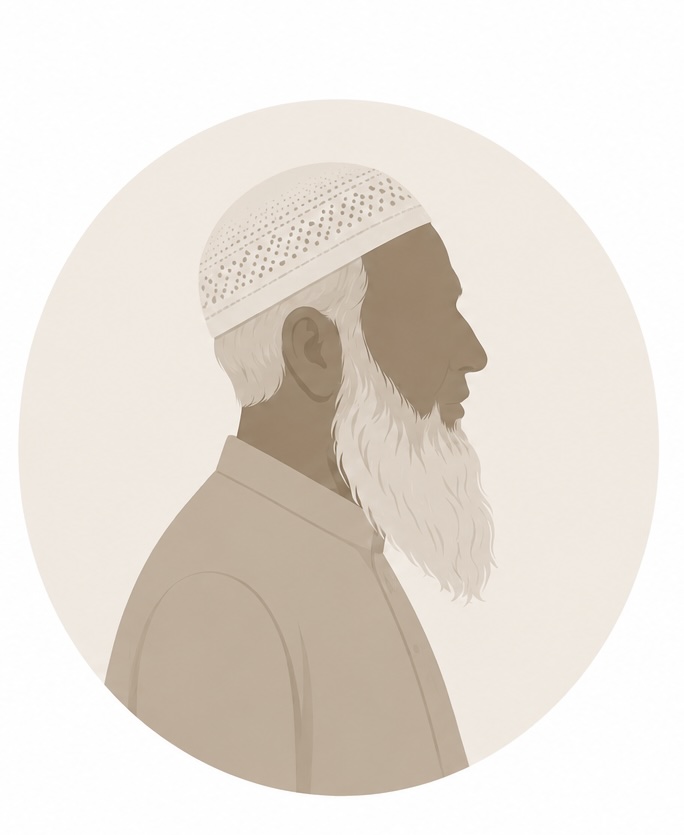
Syed Mir Nisar Ali (Titu Mir)
Syed Mir Nisar Ali — Titu Mir (1782–1831) — was the peasant king who built a fortress of bamboo and dared the British Empire to tear it down. A Bengali cultivator whose pilgrimage to Mecca in 1822 awakened him to the reformist call of Syed Ahmad Barelvi, he returned to Bengal not with prayers alone but with a plan. He would organize the poorest of the poor — the Muslim and Hindu peasants crushed under the twin boots of British indigo planters and absentee zamindars — into an army of liberation.
Titu Mir's uprising was as much economic as it was spiritual. He mobilized thousands of cultivators across 24 Parganas, Nadia, and Faridpur to resist illegal taxes — including the infamous "beard tax" imposed on Muslim peasants — and to dismantle the indigo factories that had turned free farmers into debt slaves. He established a parallel administration, appointed his own revenue collectors, and governed his territory as a sovereign ruler. For the peasantry of Bengal, Titu Mir was not just a leader; he was proof that the empire could be challenged.
In 1831, Titu Mir constructed his legendary Basher Kella — the Bamboo Fort — at Narkelberia. It was a fortress of bamboo and mud, surrounded by a double moat, defended by peasants armed with whatever they could find. On 19 November 1831, British artillery under Major Scott bombarded the fort. Titu Mir died on the ramparts, sword in hand, alongside fifty of his followers. His body was paraded through the streets as a warning — but the warning failed. The Bamboo Fort became a legend, and Titu Mir became immortal: the peasant who proved that the poorest of the poor could stand against an empire.
Sources & Further Reading
Reference Works & Encyclopedias
Scholarly Books & Archival Records
- Muin-ud-din Ahmad Khan. Titu Mir and His Followers in British Indian Records (1831–1833). Islamic Foundation Bangladesh, 1980.
- Atis Dasgupta. "Titu Meer's Rebellion: A Profile." Social Scientist, Vol. 11, No. 10, 1983.