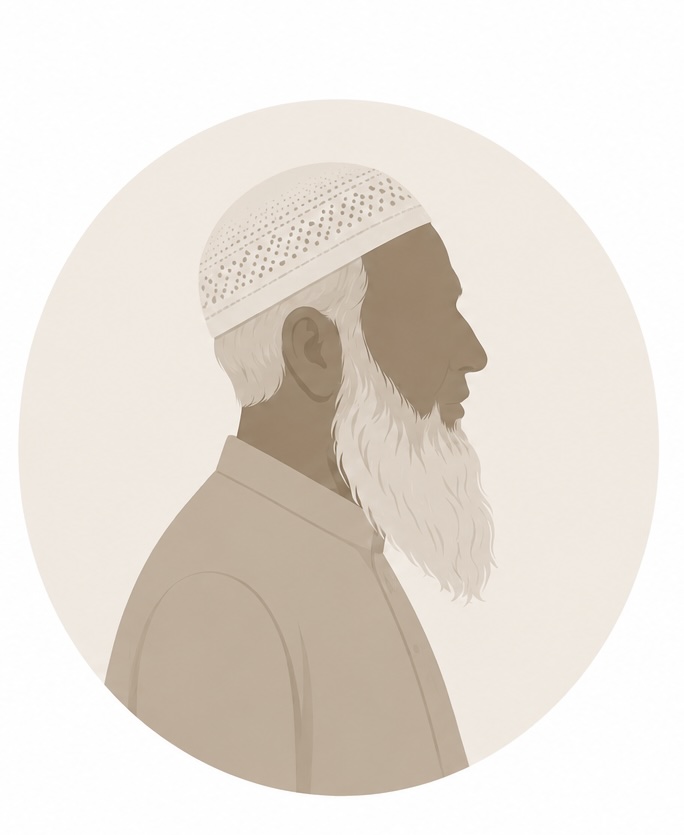
Nawab Syed Muhammad Bahadur
Nawab Syed Muhammad Bahadur (1867–1919) was the aristocrat who used his privilege not to protect the status quo but to dismantle it. Born into the family of the Nawab of Carnatic in Madras, he could have lived a life of courtly comfort. Instead, he threw himself into the early years of the Indian National Congress, becoming only the third Muslim to serve as its President when he presided over the 1913 Karachi session.
Syed Muhammad was a builder of bridges at a time when the gulf between Congress and the Muslim League was only beginning to widen. Elected to the Madras Legislative Council and then the Imperial Legislative Council, he worked within the system while simultaneously working to change it. His finest hour came during the negotiations for the 1916 Lucknow Pact — the historic agreement that brought the Congress and the Muslim League together on a joint constitutional platform. It was a moment of unity that would prove tragically brief, but it demonstrated what was possible when leaders chose cooperation over confrontation.
Beyond politics, Syed Muhammad was a devoted patron of education, serving as a trustee of numerous institutions that aimed to uplift South India's Muslim community through modern learning. He died in 1919, having spent his life proving that aristocracy and nationalism were not contradictory — and that the truest nobility lay in service to one's country.
Sources & Further Reading
Reference Works
Scholarly Books & Official Histories
- B. Pattabhi Sitaramayya. The History of the Indian National Congress (Vol. I). Padma Publications, 1935.
- David Washbrook. The Emergence of Provincial Politics: The Madras Presidency 1870–1920. Cambridge University Press, 1976.