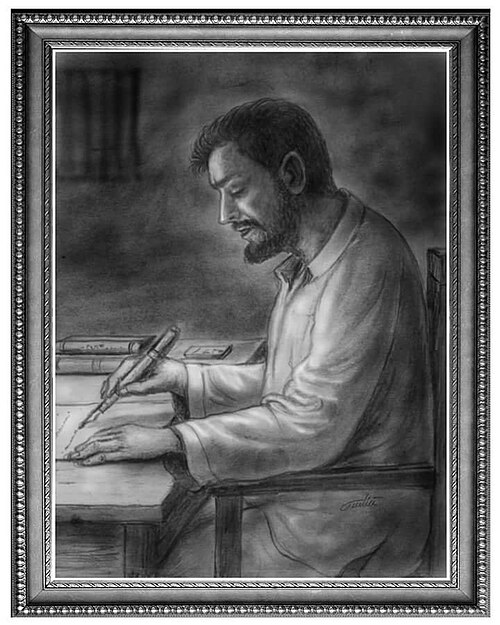
Maulvi Muhammad Baqir
Maulvi Muhammad Baqir (1780–1857) was India's first martyr of press freedom — the editor who was executed by a British firing squad for what he wrote. His Delhi Urdu Akhbar, one of the earliest Urdu newspapers in northern India, was never merely a chronicle of events. It was a weapon. Through its pages, Baqir reported on the social and political life of the declining Mughal capital with a fiercely independent voice — a voice that the British would come to fear.
When the 1857 Uprising erupted, Baqir's newspaper became the voice of the rebellion in Delhi. His editorials called for Hindu-Muslim unity against Company rule. He published letters from rebel soldiers, accounts of British defeats, and fiery calls to action that galvanized the city's population. The Delhi Urdu Akhbar was no longer a newspaper — it was the conscience of a revolution, and Baqir was its most dangerous editor.
When British forces recaptured Delhi in September 1857, Baqir was arrested by troops under Captain William Hodson. On 16 September 1857, he was executed by firing squad — the first Indian journalist killed for what he had written. His death was intended as a warning to the indigenous press. Instead, it established a tradition: that a journalist's pen could be as dangerous to empire as any sword — a truth that every colonial censor would learn to fear, and that every freedom fighter who took up the pen would remember.
Sources & Further Reading
Reference Works & Official Portals
Scholarly Books & Press Histories
- William Dalrymple. The Last Mughal: The Fall of a Dynasty, Delhi 1857. Bloomsbury, 2006.
- Margarita Barns. The Indian Press: History of the Growth of Public Opinion in India. George Allen & Unwin, 1940.