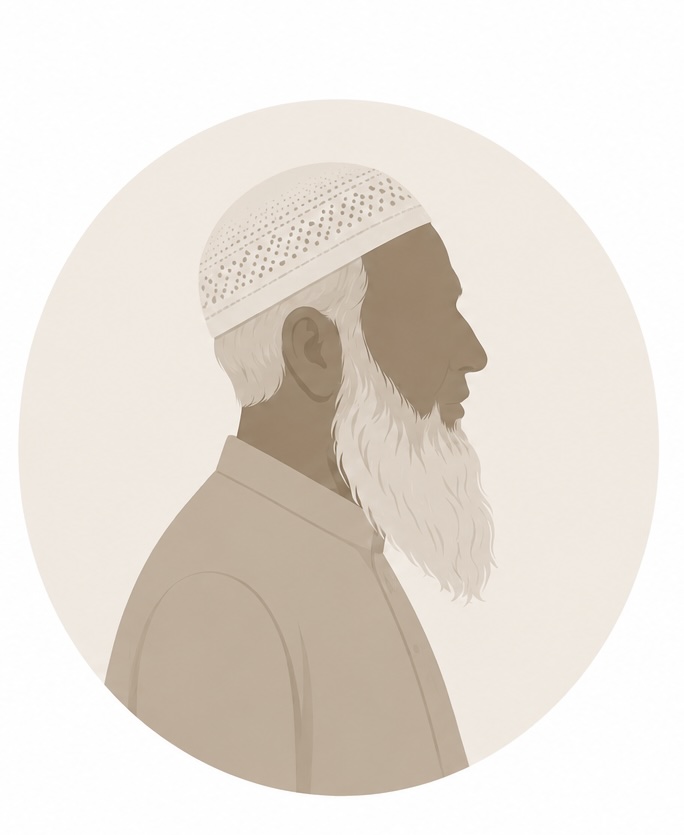
Maulana Zafar Ali Khan
Maulana Zafar Ali Khan (1873–1956) was the journalist who turned the Urdu daily Zamindar into a howitzer aimed at the heart of the British Empire. Educated at Aligarh, he understood that the battle for freedom would be won not only on the streets but in the minds of the people — and he set out to capture those minds, one edition at a time. Zamindar became one of the most widely read and feared newspapers in northern India, its editorials landing like artillery shells on the colonial administration.
The British did everything in their power to silence him. They confiscated his security deposits. They imposed crushing fines. They suspended publication under the Press Act. They threw him in prison — repeatedly. Each time, he emerged and resumed writing, his pen sharper than before. Through the pages of Zamindar, he exposed colonial land revenues, condemned military adventurism, and gave voice to the voiceless peasants of Punjab. His anti-colonial poetry, recited at political rallies across the province, became the soundtrack of resistance.
Zafar Ali Khan was a leader in the Khilafat and Non-Cooperation Movements, and later served in the Central Legislative Assembly from 1937 to 1945. But his true legacy lies in the ink he spilled. He was the voice of a generation that had found its courage — and he spoke it back to them, louder and bolder, until the empire could no longer pretend it could not hear.
Sources & Further Reading
Reference Works
Scholarly Books & Press Histories
- Margarita Barns. The Indian Press: History of the Growth of Public Opinion in India. George Allen & Unwin, 1940.
- David Gilmartin. Empire and Islam: Punjab and the Making of Pakistan. University of California Press, 1988.
- Gail Minault. The Khilafat Movement: Religious Symbolism and Political Mobilization in India. Columbia University Press, 1982.