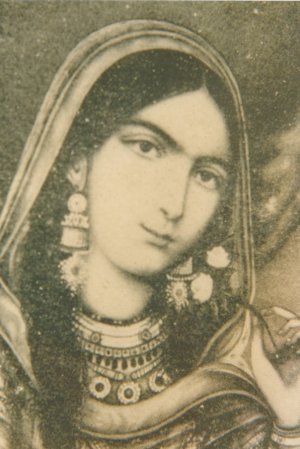
Begum Hazrat Mahal
Begum Hazrat Mahal was the uncrowned queen of Awadh's resistance — a woman of extraordinary courage who, when the British exiled her husband and annexed her kingdom, simply refused to bow. Born Muhammadi Khanum in Faizabad, she rose from the royal court of Awadh to become one of the most formidable leaders the British Empire ever faced in India. In 1856, when the East India Company annexed Awadh under pretext of misgovernance and sent Nawab Wajid Ali Shah to Calcutta, Begum Hazrat Mahal stayed behind — and prepared for war.
When the 1857 Uprising erupted, she emerged as its undisputed leader in Awadh, rallying soldiers, peasants, and landholders across the region. Proclaiming her young son Birjis Qadr as Nawab, she seized the reins of power as Regent and governed with a skill that stunned colonial observers. Rebel forces under her command captured Lucknow and held it for months against relentless British counter-attacks. Her official proclamations called upon Hindus and Muslims to unite against Company rule, defending indigenous sovereignty and religious freedom with arguments that directly challenged Queen Victoria's own declarations.
When British forces finally recaptured Lucknow in March 1858, they offered her a royal pension and a pardon if she would surrender. She refused both, choosing exile over submission, and retreated with her son and loyal followers to the Nepal Terai, where she lived undefeated until her death in 1879. Times correspondent William Howard Russell, who witnessed her leadership, described her as displaying a resolve and political intelligence superior to the men who had surrendered. She remains a towering symbol of resistance — a queen who chose exile over surrender, and whose courage shamed those who had abandoned the fight.
Sources & Further Reading
Reference Works
- Encyclopaedia Britannica. "Begum Hazrat Mahal."
- Encyclopaedia of Indian History (Begum Hazrat Mahal & 1857 Rebellion).
Libraries & Archives
Scholarly Books
- Rudrangshu Mukherjee. Awadh in Revolt, 1857–1858. Oxford University Press.
- Rosie Llewellyn-Jones. The Great Uprising in India, 1857–58. Boydell Press.
- S. B. Chaudhuri. Civil Rebellion in the Indian Mutinies, 1857–1859.
- Surendra Nath Sen. Eighteen Fifty-Seven. Publications Division.
Government Resources